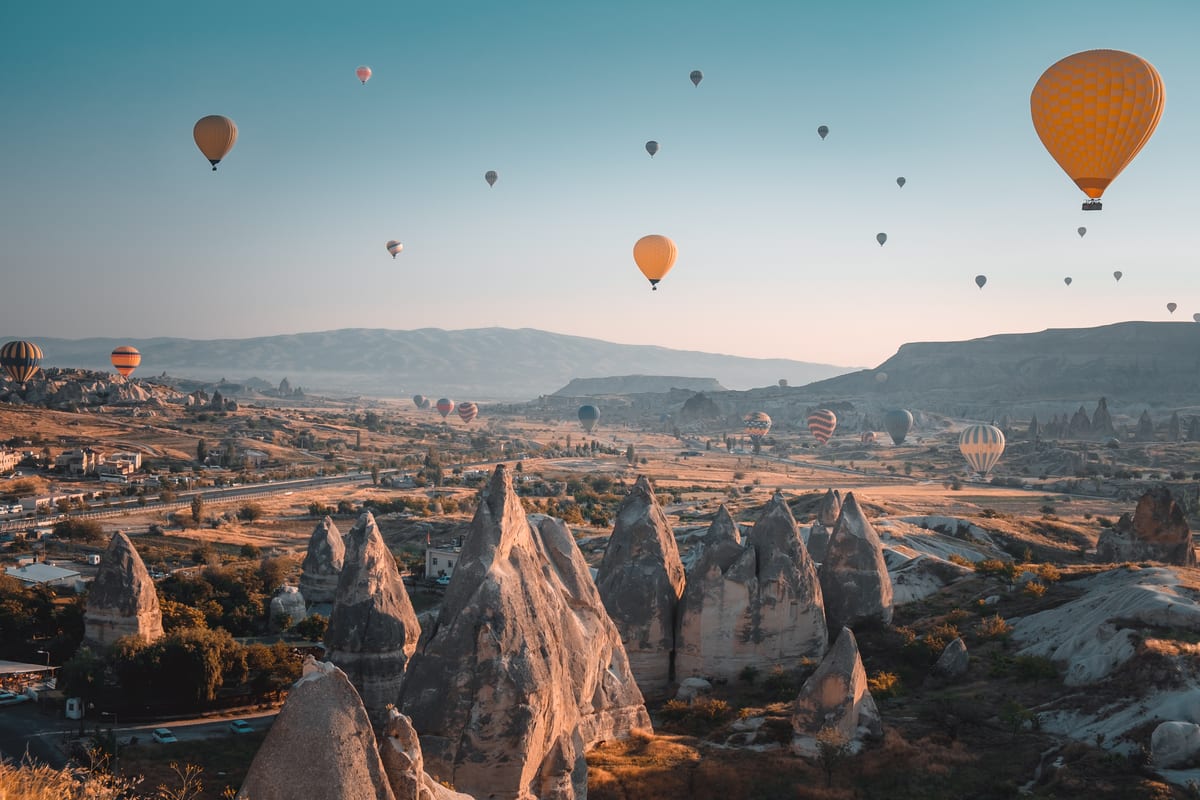
Cappadocia Balloon Environmental Impact: What You Should Know
On a peak summer morning, reportedly up to 150 propane burners fire simultaneously above the Goreme valley. Chase vehicles crisscross dirt roads to meet landing balloons. Champagne corks pop in agricultural fields. For an activity that feels so peaceful from inside the basket, the question is fair: what footprint does all of this leave on Cappadocia?
How Much Carbon Do Balloon Flights Produce?
Hot air balloons burn liquid propane (LPG). A typical 60-minute flight for a full basket (22–28 passengers) is estimated to use approximately 150–200 liters of propane. Burning one liter of propane produces roughly 1.5 kg of CO2, a standard combustion figure. That puts a single flight at approximately 225–300 kg of CO2 total, though actual figures vary by balloon size, burner efficiency, and conditions.
Split across 25 passengers, that is about 9–12 kg of CO2 per person per flight. For context (these are commonly cited approximate travel-emissions figures, not audited data):
| Activity | CO2 per Person |
|---|---|
| Cappadocia balloon flight (60 min) | ~10 kg |
| Istanbul–Kayseri flight (one way) | ~70 kg |
| Helicopter tour (30 min) | ~80–120 kg |
| Driving a car for 100 km | ~15–20 kg |
Per passenger, a balloon flight produces roughly the same emissions as a 100 km car journey. The flight that brought you to Cappadocia generates 4–5 times more carbon than the balloon ride itself. That does not make the emissions zero, but it puts them in proportion.
What About the Cumulative Impact?
With up to 150 balloons flying daily in peak season across most of the year, the total annual emissions from Cappadocia’s balloon industry are meaningful in absolute terms, though we don't have an independently sourced, verifiable emissions estimate to cite here. For context, propane-burner emissions from ballooning are generally understood to be a small fraction of the total tourism footprint compared to the vehicles, hotels, and flights that bring visitors to the region.
Propane also burns relatively cleanly compared to other fossil fuels. It produces no soot, no sulfur dioxide, and minimal particulate matter. The flame itself produces water vapor and CO2, with no visible exhaust.
Do Balloons Affect Wildlife?
Cappadocia is home to various bird species, including rock pigeons (the namesake of Pigeon Valley), kestrels, swifts, and migratory birds passing through in spring and autumn. The question of noise disturbance and flight path interference is legitimate.
Balloon flights are planned around sunrise, subject to suitable weather and operational approval each morning—there is no fixed daily launch or landing time. By the time the sun is fully up and bird activity peaks, balloons are already landing or packed up. The burner noise is intermittent (3–5 second blasts every 30–60 seconds during flight), and it is reasonable to expect that wildlife would acclimate to regular, predictable activity more readily than to sporadic disturbance, though we don’t have independently sourced local research to confirm this.
That said, low-altitude passes over nesting areas could cause disturbance during breeding season. SHGM’s flight corridor regulations help mitigate this by keeping balloons within designated zones and above minimum altitudes over sensitive areas. As a booking/coordination agency, Above Cappadocia does not operate flights itself, so we cannot confirm what additional precautions, if any, a specific operator takes around known nesting sites.
What About Land Impact?
Balloons launch from designated fields near Goreme, but they can land almost anywhere the wind takes them—farmland, open plateaus, vineyard edges, or roadside clearings. This creates several land-use considerations:
Agricultural land
Balloons occasionally land on or near cultivated fields. Basket dragging during landing can damage crops. Chase vehicles driving across fields add to the issue. Operators generally aim to compensate farmers for crop damage, and SHGM regulations require operators to minimize agricultural impact. Landings generally aim for flat, uncultivated areas or designated landing zones when wind allows.
Erosion and trail damage
Chase vehicles use dirt roads and sometimes cross-country routes to reach landing sites. Over thousands of flights per year, this creates wear on unpaved surfaces. The volcanic tuff that makes Cappadocia’s fairy chimneys so spectacular is also relatively soft and erosion-prone. Some operators are reportedly shifting toward designated access routes to reduce new track creation.
Waste
Post-flight celebrations generate some waste: champagne bottles, plastic cups, certificate packaging. Responsible operators pack out everything from the landing site rather than leaving it behind. Above Cappadocia coordinates bookings rather than operating flights itself, so we cannot confirm which specific recycling or packaging practices a given operator uses on a given day.
Noise Impact on Residents and Visitors
The propane burner is the loudest part of the operation. A single burner blast reaches an estimated 90–100 decibels at the basket (similar to a lawn mower). From the ground, at 100–200 meters distance, it drops to roughly 60–70 decibels—comparable to normal conversation.
For Goreme residents and cave hotel guests, the morning burner sounds are part of daily life from April through November. Opinions vary—some find the periodic roar atmospheric, others find it disruptive at 5:00 AM. Hotels with balloon-view terraces market the sound as part of the experience. Hotels further from launch sites are naturally quieter.
SHGM limits the number of operators and the total number of balloons that can fly on any given morning. This cap exists partly for safety (airspace management) but also serves to limit noise and visual density over the valleys.
What Are Operators Doing to Reduce Impact?
The balloon industry in Cappadocia is not standing still on environmental issues, though we are cautious about presenting practices we cannot independently verify as universal.
Balloon manufacturing has generally moved toward more fuel-efficient burner designs over time, an industry-wide trend rather than something specific to any one Cappadocia operator. Locally, the practices we can speak to with more confidence are: operators coordinate to use consistent landing areas, which limits the number of fields affected; ground crews are expected to pack out post-flight waste rather than leave it behind; and SHGM’s designated-corridor rules constrain flight paths in ways that also limit land disturbance. We do not have independently verified figures for specific fuel-savings percentages, vehicle-fleet composition, or envelope-recycling programs across operators, so we are not publishing numbers we cannot stand behind.
The Tourism Trade-Off
Balloon flights are a major draw for Cappadocia’s tourism industry. They attract visitors who stay in cave hotels, eat in local restaurants, buy pottery from Avanos workshops, drink wine from Turasan vineyards, and hire guides for valley hikes and underground city tours. The balloon flight itself may last an hour, but many visitors plan a multi-night stay in the region around it.
This economic activity funds conservation. Several of the valleys that balloons fly over are protected areas maintained with revenue from tourism permits and local taxes. Without the tourism income that balloons drive, the funding for heritage preservation and environmental maintenance would be substantially less.
That does not mean the environmental costs are justified simply because the economic benefits exist. It means the relationship is more complex than “balloons bad.” The challenge is managing growth, maintaining standards, and reducing per-flight impact over time.
What Can You Do as a Passenger?
- Choose a responsible operator. Ask about waste management, landing practices, and environmental policies. Operators who think about these issues tend to run better operations overall. For guidance, see our guide to choosing a balloon company.
- Fly in a fuller basket. Our sunrise balloon flight carries 22–28 passengers; sharing a basket generally means lower emissions per person than a lightly loaded flight in a similar-sized envelope.
- Stay longer in Cappadocia. Getting to and from the region by air is almost certainly the largest part of any visitor’s trip-related carbon footprint—larger than the balloon flight itself. Staying several nights instead of one spreads that travel footprint across more experiences. Our 3-day itinerary and 5-day itinerary can help you plan.
- Take your waste with you. Do not leave anything at the launch or landing site. If you see litter, pick it up.
- Offset if you choose. Several carbon offset platforms allow you to offset your travel emissions, including the balloon flight, for a few euros.
Our Approach at Above Cappadocia
We are honest about the fact that burning propane has an environmental cost. As a booking/coordination agency, Above Cappadocia does not operate flights itself, so we cannot guarantee uniform environmental practices across every assigned operator, and we do not publish specific operational claims (waste handling, fuel efficiency, vehicle fleets) that we have not independently verified. The industry has room to improve. We believe in transparency about what we know and what remains to be confirmed.
For more about our operations and safety standards, see our safety page and complete safety guide.
Related Articles
What Happens Inside a Hot Air Balloon Basket: The Full Experience
What happens inside a hot air balloon basket in Cappadocia? Minute-by-minute from inflation to landing, sensory details, and insider tips.
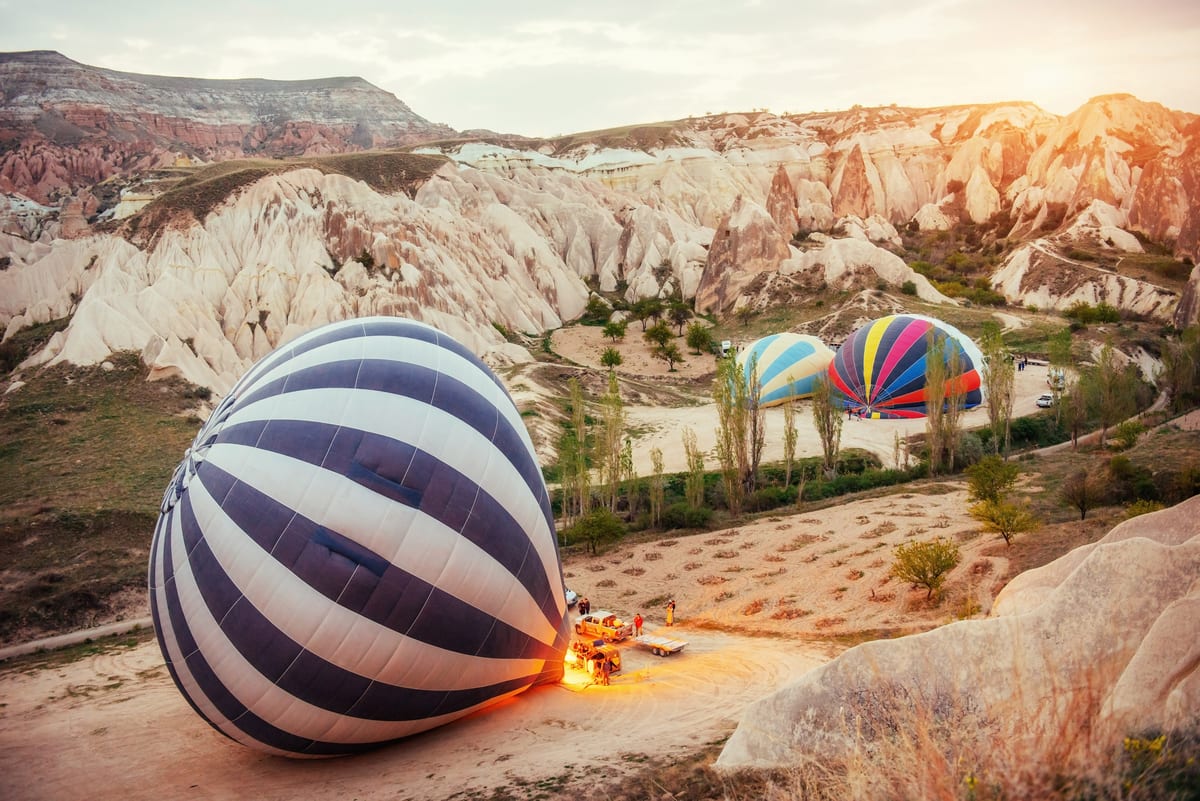
How Cappadocia Balloons Inflate and Land: The Full Procedure
How Cappadocia balloons typically inflate and land: cold inflation, hot inflation, launch sequence, in-flight controls, and landing on the trailer.
Cappadocia Balloon Photography: The Complete Guide
Cappadocia balloon photography complete guide: camera settings, lens choices, phone vs DSLR, golden hour timing, basket angles, and editing tips. From EUR 150.
Fly with a Responsible Operator
Above Cappadocia coordinates your flight with licensed, insured operators, and is committed to transparency about our environmental footprint. Sunrise flights from EUR 150 per person.