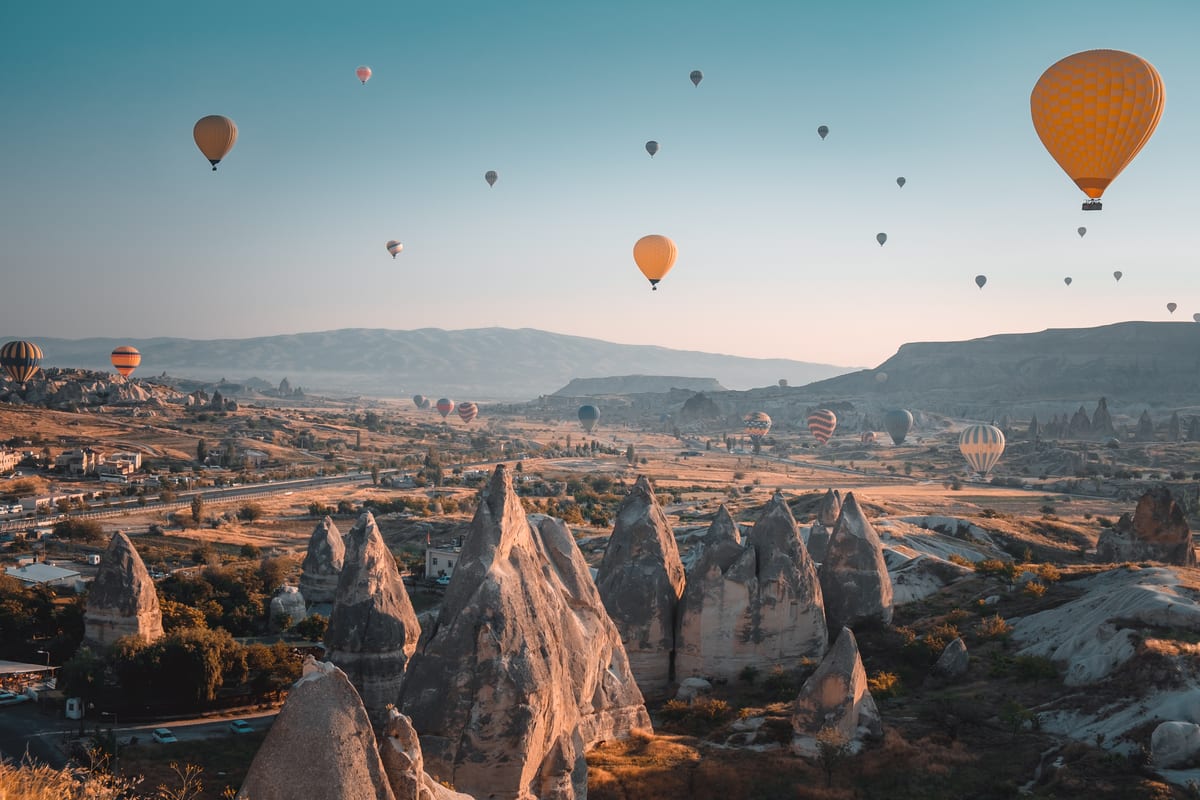
Cappadocia Balloon Winter Guide: Flying Over Snow-Covered Fairy Chimneys
The van picks you up in the pre-dawn cold and the heater is working hard. Outside, Goreme is silent under a blanket of fresh snow. Stars are still visible. Your breath fogs the window as you press your face against the glass, watching white-dusted fairy chimneys slide past in the dark. This is winter ballooning in Cappadocia—cold, uncertain, and absolutely unforgettable when the sky says yes.
Flights operate year-round in Cappadocia, weather permitting. Winter months (December through February) bring the most flight-disrupting weather of the year, since wind, fog, and snow ground flights more often than in other seasons — see our cancellation rates and weather guide for the seasonal breakdown. But the flights that do happen produce some of the most dramatic scenery you will ever see from a balloon basket. Snow transforms the valleys into something from a fairy tale that actually earned the name.
What Does Winter Weather Look Like in Cappadocia?
Cappadocia sits at roughly 1,000 meters elevation on the Anatolian plateau. Winter here is real winter—not the mild Mediterranean kind that coastal Turkey enjoys.
| Factor | December | January | February |
|---|---|---|---|
| Sunrise temperature | Cold, at or below freezing | Coldest of the winter | Cold, easing slightly |
| Daytime high | Cool | Coldest daytime highs of the year | Starting to warm |
| Snowfall | Moderate | Heaviest month | Moderate, melting starts |
| Weather pattern | Frequent wind, snow & fog | Frequent wind & snow | Still unsettled, slowly improving |
| Sunrise time | ~7:15 AM | ~7:20 AM | ~6:50 AM |
| Crowd level | Low | Very low | Low |
January is the coldest and least reliable month. February starts warming slightly toward the end. December is popular thanks to holiday travelers and New Year’s visitors, despite the cold. For a deeper look at cancellation data across all months, see our cancellation rates and weather data guide.
Why Winter Flights Are Worth the Risk
The cancellation numbers are real, and we will never sugarcoat them. But here is what makes winter special for the flights that do launch:
- Snow-covered fairy chimneys. The volcanic rock formations wear white caps of snow. Love Valley, Rose Valley, and Devrent Valley look completely different under a winter blanket. Many photographers consider it the most dramatic version of Cappadocia.
- Fewer balloons in the sky. Summer mornings can see well over a hundred balloons. Winter mornings often have far fewer—sometimes just a handful, depending on the day. Your photos will have cleaner compositions, and the experience feels more intimate.
- Later sunrise. Your alarm goes off correspondingly later than in summer. For travelers who struggle with early wake-ups, winter is kinder.
- Sharper air. Cold air is denser, which gives the balloon more lift and often produces smoother, more stable flights. The visibility on clear winter mornings is extraordinary.
- Smaller crowds everywhere. Not just in the basket—the entire region is quieter. Cave hotels offer better rates, restaurants have open tables, and valley hikes feel private.
What to Wear for a Winter Balloon Flight
The basket shields you from wind at ground level, and the burner above your head radiates significant heat. But your hands, face, and feet will feel the cold. Here is our layering recommendation:
- Base layer: Thermal underwear (merino wool or synthetic). This is non-negotiable below 0 °C.
- Mid layer: Fleece or down jacket. Something you can unzip if the burner makes you warm.
- Outer layer: Windproof jacket. Not necessarily waterproof—you will not be in rain—but wind protection matters during inflation and landing.
- Hands: Touchscreen-compatible gloves. You will want to operate your phone camera without removing them.
- Feet: Thick wool socks and insulated boots. The basket floor is wicker and offers no insulation from the cold ground during setup.
- Head: Beanie or warm hat that fits under a hood. Earmuffs work too.
- Scarf or neck gaiter: Protects your face during the open-air light snack and hot drinks before launch.
For a complete season-by-season clothing guide, check our what to wear on a Cappadocia balloon ride article.
How the Go/No-Go Decision Works in Winter
Every morning, the Civil Aviation Authority (SHGM) evaluates wind speed, visibility, cloud ceiling, and precipitation before granting flight permission. In winter, three conditions cause most cancellations:
- Wind. Surface winds above 10 knots or upper winds above 20 knots ground all flights. Winter storms can push wind speeds well above these limits for days at a time.
- Fog. Cold valley bottoms trap moisture, creating dense morning fog. If visibility drops below required minimums, flights are cancelled even if wind is calm.
- Active snowfall. Falling snow reduces visibility and changes wind patterns unpredictably. Flights do not operate during active precipitation.
The decision has no fixed announcement time—it can be confirmed the evening before or at the last minute, depending on conditions. We send a WhatsApp message to confirmed passengers as soon as we know. If your flight is cancelled, your booking is refunded (a €10 per-passenger card-processing fee applies to card refunds; cash or bank-transfer refunds have no deduction). Rebooking to a new date is not automatic or free—the new date is a separate booking subject to that day's price and availability, and no slot is guaranteed for the next morning. For full details on weather policies, visit our weather and cancellation policy page.
How to Maximize Your Chances of Flying in Winter
The single best strategy: stay longer. Winter the weather is often unsettled, so a 2-night stay gives you only a modest chance of flying. Three nights improves your odds meaningfully, and four nights gives you the best chance of flying at least once.
- Book your balloon for the first morning. If it gets cancelled, you have remaining mornings as backup—we can help you rebook, though the new date is a separate booking subject to that day's price and availability, with no slot guaranteed.
- Stay flexible with your itinerary. Plan ground activities (underground cities, valley hikes, pottery workshops) that can fill any day, and keep every morning open for the potential flight.
- Watch the 5-day forecast. While Cappadocian weather changes quickly, a 5-day outlook helps you pick a travel window with at least some clear days.
- Consider late February. The weather starts calming, snow is often still on the ground, and temperatures are slightly more forgiving. It is arguably the sweet spot for winter balloon photography.
If your flight does get cancelled and you have run out of mornings, we have a full list of 12 alternative activities so your trip is still memorable.
Winter Photography Tips from the Basket
Snow-covered Cappadocia is a photographer’s dream, but cold weather adds challenges. Here are a few practical tips for photographing a winter flight:
- Battery life drops in cold. Keep your phone or camera battery close to your body (inside pocket) until you need it. Bring a power bank in an inner pocket as well.
- Lens fog is real. Moving from a warm van to cold outdoor air can fog your lens instantly. Take your camera out of your bag 5 minutes before launch to acclimate.
- Snow exposure. The white ground confuses auto-exposure. Add +0.5 to +1.0 exposure compensation so the snow looks white, not gray.
- Golden hour is longer. Winter sun stays low on the horizon for longer, giving you an extended golden hour. The warm light on white snow is extraordinary.
For camera settings and angles, read our complete balloon photography guide.
Our Flight in Winter
Our Sunrise Balloon Flight (from €150 per person, 22–28 passengers) runs year-round, and winter changes the experience slightly in its favor. With fewer passengers booking in the cold months, baskets are sometimes less full, and the approximately 60-minute flight passes over snow-covered valleys many visitors never see in summer.
What Else to Do in Cappadocia During Winter
Winter does not shut Cappadocia down. Many attractions are open year-round, and some are actually better without summer crowds:
- Underground cities. Derinkuyu and Kaymakli are underground, so temperature is constant year-round. No crowds in winter.
- Goreme Open Air Museum. The cave churches and frescoes are protected from weather. Winter light through the doorways creates beautiful conditions for photography.
- Cave hotel experience. Staying in a cave hotel during winter is genuinely cozy. The volcanic rock walls provide natural insulation, and many hotels have fireplaces. See our cave hotels with balloon views guide.
- Pottery workshops. Avanos pottery studios run all year. An afternoon shaping clay on a wheel is a perfect backup for cancelled flight mornings.
- Turkish breakfast by the fire. Simit, borek, local cheeses, olives, honey, and endless cay. Winter breakfast in a warm cave restaurant is one of Cappadocia’s great pleasures.
- Local wine tasting. Turasan and other Cappadocian wineries are open in winter. The volcanic soil produces surprisingly good wines, and tasting rooms are warm and uncrowded.
Winter Pricing and Booking Tips
Our flight price remains the same year-round—from €150 per person. We do not charge seasonal premiums. What does change in winter:
- Cave hotel prices drop significantly compared to peak summer rates.
- Fewer passengers means easier availability. You can often book just a few days ahead, though we still recommend booking early to secure your date.
- Cancellation applies year-round. Cancel 24 hours or more before your flight and your payment is refund-eligible (a €10 per-passenger card-processing fee applies to card refunds; cash or bank-transfer refunds have no deduction). Cancellations less than 24 hours before the flight are non-refundable. Weather cancellations are refunded on the same terms; rebooking to a new date is a separate booking, not automatic or free.
For full pricing details, visit our pricing page. To book, head to our booking page—it is a short online form.
Is a Winter Balloon Flight Right for You?
Winter ballooning is for travelers who value scenery over certainty. If you need the best odds on a specific date, visit between May and October when the weather pattern is calmest. If you are flexible, willing to layer up, and excited by the idea of floating over snow-dusted valleys with only a handful of other balloons in the sky—winter is extraordinary.
For many, the cold is worth it. The snow on the fairy chimneys, the quiet sky, the low golden light stretching across white valleys—it is a version of Cappadocia that many visitors never see.
For more help choosing the best time for your trip, read our best time to fly guide or our month-by-month complete guide.
Related Articles
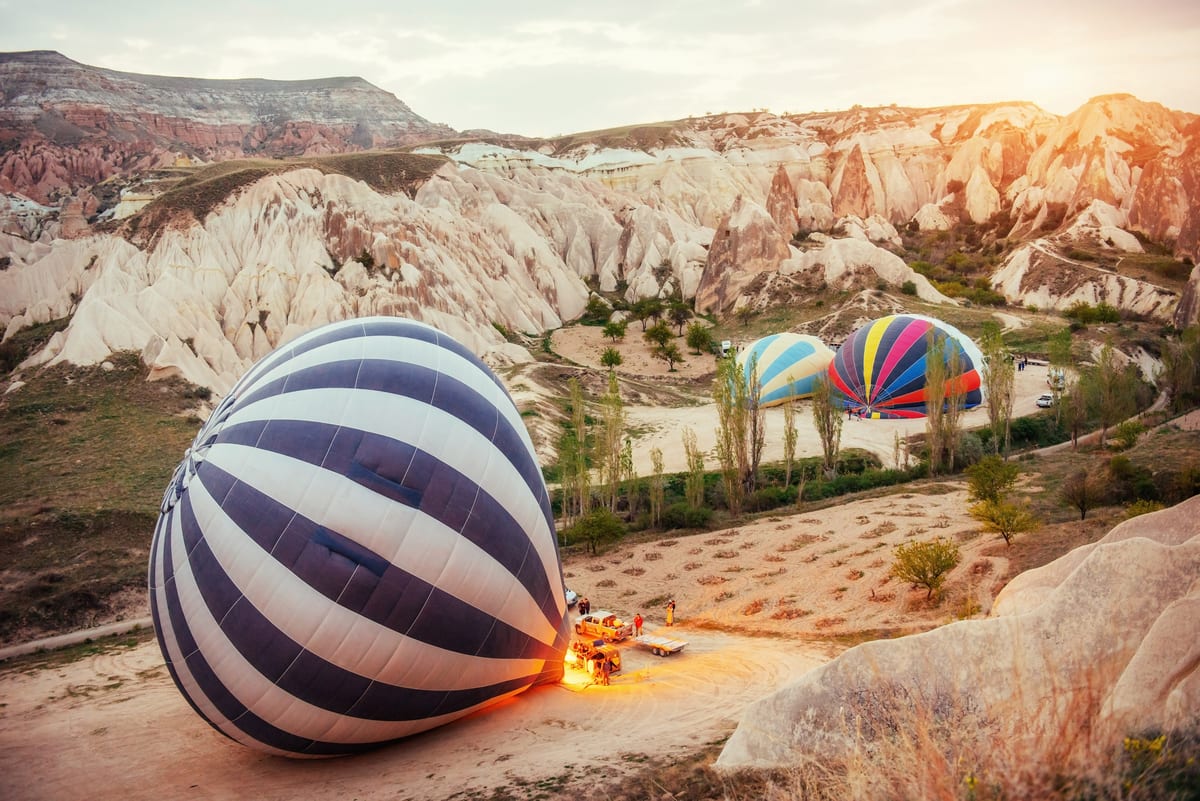
Cappadocia Balloon Rides in November: Your Late Autumn Flight Guide
November balloon flights in Cappadocia: 0-7 C at sunrise, more unsettled weather, golden autumn colors fading to winter. Honest guide with tips. From EUR 150.
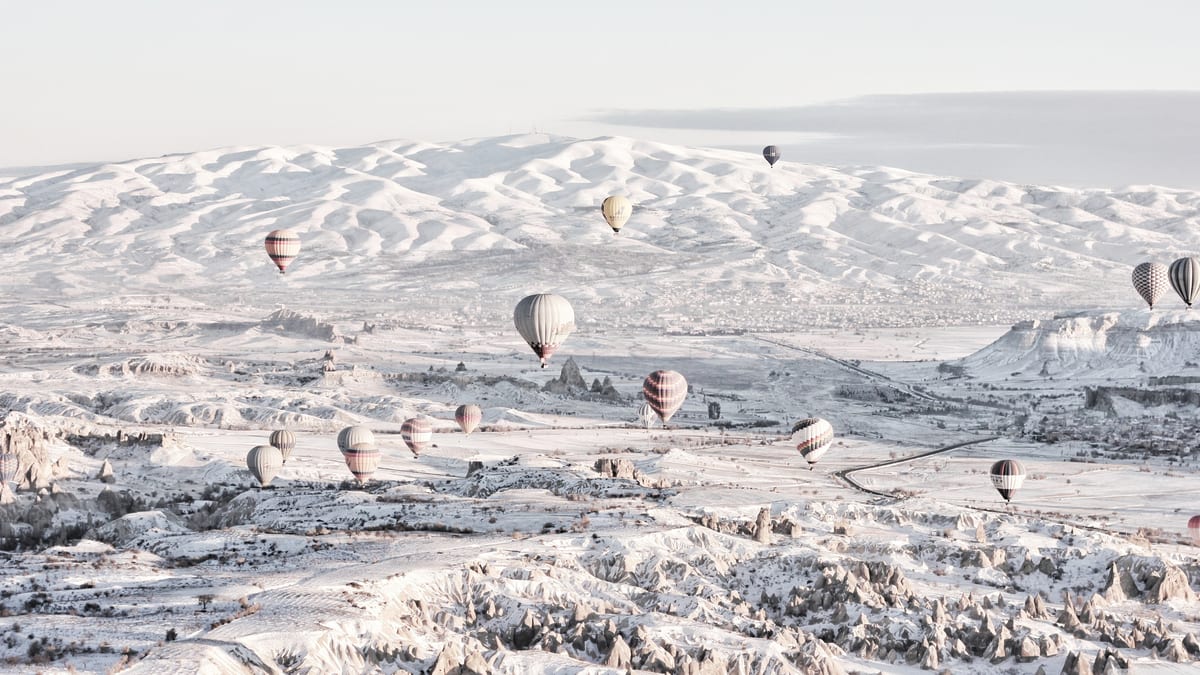
Cappadocia Balloon Rides in August: Your Peak Season Flight Guide
August balloon flights in Cappadocia: dozens of balloons in the sky each morning, 15-22 C at sunrise, the year's calmest flying weather. Beat the crowds and heat with our peak season tips.
Cappadocia Balloon Rides in May & June: Your Early Summer Flight Guide
Cappadocia balloon flights in May and June: 10-18 C, calm, stable weather, wildflowers below. Early summer conditions, what to wear, and booking tips.
Ready to Fly Over a Winter Wonderland?
Sunrise balloon flights from EUR 150 per person, year-round. Hotel pick-up, a light snack with hot and cold drinks, and champagne celebration included.