How Hot Air Balloons Work + Cappadocia Ballooning History
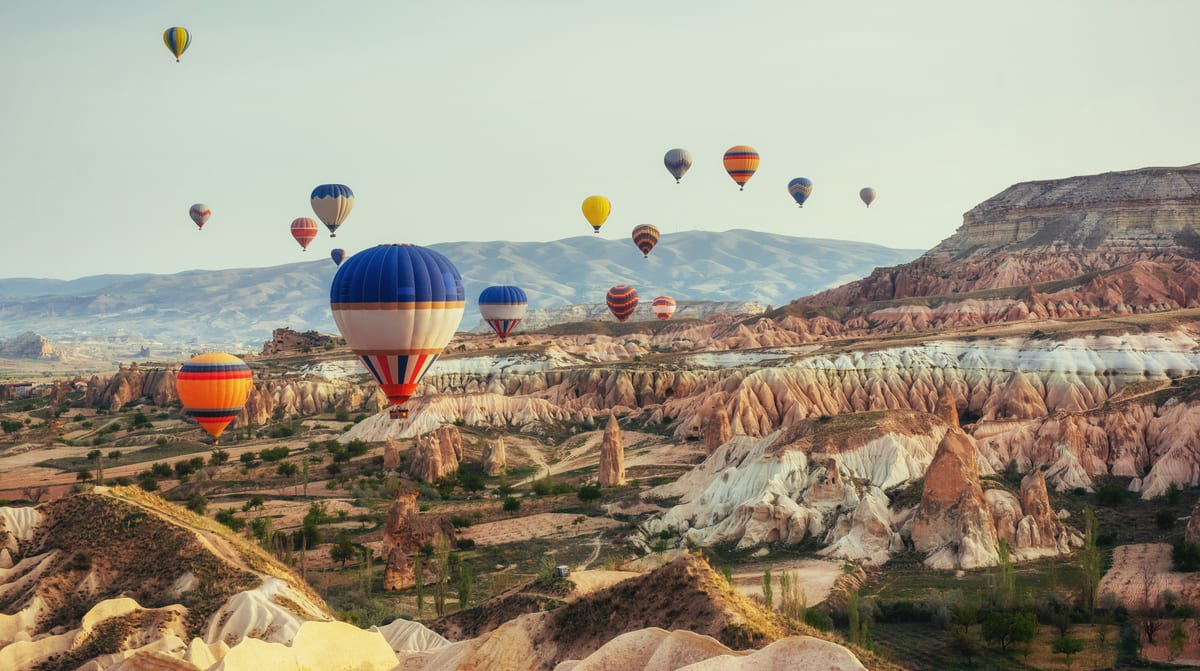
Picture this: it is 5:15 AM in Göreme, and a ground crew is spreading 2,800 square metres of nylon fabric across a dark field. A fan the size of a washing machine roars to life, forcing cold air into the envelope. Then the pilot fires the burner—a blast of propane burning at roughly 1,900–2,000°C—and the balloon begins to rise from the ground like a slow-motion giant. Within eight minutes, a flat sheet of fabric becomes a 25-metre-tall structure carrying up to 22–28 people into the Cappadocia sky.
It is a striking sight, and the physics behind it are surprisingly simple. The history of how ballooning arrived in Cappadocia is a story many visitors never hear.
The Basic Science: Why Hot Air Rises
A hot air balloon operates on one of the simplest principles in physics: heated air is less dense than the cooler air surrounding it, so it rises. That is the entire concept. No engine, no wings, no fuel-burning turbine. Just a burner, a fabric envelope, and gravity doing what gravity does.
The air inside a standard balloon envelope is heated to roughly 100°C above the outside temperature. At that differential, the air inside becomes about 25% lighter than the ambient air outside. Multiply that by the volume of the envelope—typically 2,800 to 3,400 cubic metres for the balloons used for Cappadocia sunrise flights—and you get enough lift to carry a basket, a pilot, fuel tanks, and up to 22–28 passengers.
The pilot controls altitude by firing the burner to go up and opening a vent at the top of the envelope (called the parachute valve) to release hot air and descend. There is no steering wheel. Horizontal direction comes entirely from wind currents at different altitudes, which is why Cappadocia's layered wind patterns make it such an exceptional place to fly.
Anatomy of a Hot Air Balloon
Every balloon you see over Cappadocia consists of three main components, each engineered for a specific job.
The Envelope
This is the colourful fabric part most people recognise. It is made from rip-stop nylon or polyester, stitched into vertical panels called gores. A typical Cappadocia balloon has 24 gores and stands about 25 metres tall when inflated. The fabric near the mouth (the opening at the bottom) is treated with a special silicone coating to withstand temperatures above 130°C from the burner flame. Envelopes have a usable lifespan of roughly 500 to 700 flight hours before replacement.
The Burner System
Mounted on a frame above the basket, the burner is the pilot's primary instrument. Most Cappadocia balloons use dual or triple burner systems fuelled by liquid propane stored in aluminium tanks inside the basket. A single blast from the burner produces roughly 3 million BTU of heat—equivalent to 900 kilowatts. The loud “whoosh” you hear during flight? That is propane vaporising and igniting in a coil above your head. Each flight consumes approximately 130 to 180 litres of propane depending on duration and passenger weight.
The Basket
Balloon baskets are made from woven wicker and rattan—a material choice that dates back to the 1700s. Wicker is used because it is lightweight, flexible, and absorbs impact energy during landing far better than rigid materials like metal or fibreglass. A basket built for our 22–28 passenger capacity weighs about 140 kg empty and is divided into compartments to distribute weight evenly, aiming to give each guest a stable position with a clear view over the edge. Learn more about our sunrise balloon flight.
By the Numbers
- Envelope volume: 2,800–3,400 m³
- Envelope height: ~25 metres
- Burner output: ~3 million BTU per blast
- Propane per flight: 130–180 litres
- Basket weight (empty): ~140 kg
- Max flight altitude in Cappadocia: ~600 metres AGL
- Envelope lifespan: 500–700 flight hours
How Pilots Steer Without a Steering Wheel
This is a question passengers often ask during flight. The short answer: pilots cannot steer horizontally in the traditional sense. They read wind patterns at different altitudes and climb or descend to catch currents moving in the desired direction.
In Cappadocia, the valley geography creates a layer-cake of wind currents. At ground level, air tends to flow along the valley floors. At 100–200 metres, the wind often shifts direction as it clears the ridgeline. Above 300 metres, upper-atmosphere patterns take over. An experienced pilot can exploit these layers to navigate across specific valleys, linger over a particular formation, or position the balloon for a precise landing. Pilots flying these routes hold SHGM commercial balloon licenses and are experienced with Cappadocia's wind layers.
This is also why calm mornings are ideal. When winds are light and directions are predictable, the pilot has maximum control. When conditions are marginal, the Turkish Civil Aviation Authority (SHGM) can cancel flights for safety. Read more about the safety regulations that govern every flight.
A Brief History of Hot Air Ballooning
The Montgolfier brothers, Joseph-Michel and Jacques-Étienne, launched the first untethered human balloon flight on 21 November 1783 in Paris. Their passengers—Jean-François Pilâtre de Rozier and the Marquis d'Arlandes—flew about 9 kilometres over Paris at an altitude of roughly 150 metres. The envelope was made of silk and paper, and the heat source was a straw-and-wool fire burning in an iron brazier. The flight lasted 25 minutes.
For the next two centuries, ballooning evolved slowly. Gas balloons using hydrogen (and later helium) replaced hot air designs for most of the 19th and early 20th centuries. The modern hot air balloon as we know it was reinvented in 1960 by Ed Yost in the United States, who replaced solid fuel with propane burners and silk envelopes with nylon. That basic design has remained largely unchanged.
The post-flight champagne toast is a familiar ballooning custom, and we continue it at every flight.
How Ballooning Came to Cappadocia
Commercial balloon flights in Cappadocia started in 1991, when Swedish pilot Lars-Eric Moere brought two balloons to Göreme and flew the first paying passengers over the fairy chimneys. At the time, Cappadocia was known mainly to archaeology enthusiasts visiting the cave churches. Tourism infrastructure was minimal. The nearest airport with regular service, Kayseri Erkilet, handled a fraction of the traffic it sees today.
By the late 1990s, two or three companies were operating a total of five to eight balloons. The pilots were mostly Europeans, and the season was limited to summer months. Word spread among adventure travellers, and demand grew steadily through the 2000s. The Turkish government recognised ballooning's tourism potential and established formal licensing under the Directorate General of Civil Aviation (SHGM), creating a heavily regulated commercial balloon operation.
The real explosion came between 2010 and 2015. Social media—Instagram in particular—turned images of dozens of balloons rising over fairy chimneys into one of the most recognisable travel photographs on earth. Cappadocia went from a niche destination to a global bucket-list item almost overnight.
| Year | Milestone |
|---|---|
| 1783 | First manned balloon flight (Montgolfier brothers, Paris) |
| 1960 | Ed Yost reinvents the modern hot air balloon with propane burner |
| 1991 | First commercial balloon flights in Cappadocia (Lars-Eric Moere) |
| Late 1990s | A handful of operators and balloons |
| 2005 | SHGM formalises licensing and daily inspection protocols |
| 2010–2015 | Social media boom; Cappadocia becomes a global travel icon |
| 2019 | Peak year: reportedly 25+ licensed operators, up to 150 balloons per morning |
| 2026 | ~25 operators, stricter SHGM standards, advanced weather monitoring |
Why Cappadocia Is One of the World's Best Balloon Destinations
Other places offer balloon flights. Kenya has the savannah. Bagan has the temples. But Cappadocia holds a combination of factors that no other location matches.
- •Terrain: The fairy chimneys, cave dwellings, and eroded volcanic valleys create visual density that is unmatched. You are never looking at a blank horizon—there is always something extraordinary directly below.
- •Wind patterns: The valley geography produces predictable, layered wind currents that give pilots exceptional control. This means longer flights, more scenic routing, and operations pilots can plan around with confidence.
- •Scale: A good morning can see well over a hundred balloons in the sky. Seeing that many coloured balloons scattered across the sky is itself a spectacle that amplifies the experience.
- •Sunrise quality: The continental climate produces clear mornings with low humidity. The sunrise light hitting volcanic rock and ancient stone creates colours that photographers travel thousands of kilometres to capture.
- •Regulation: SHGM enforces strict pilot licensing, regular balloon inspections, and weather-based flight decisions. This level of oversight applies to every licensed commercial balloon operation in the region.
What Happens Before You Even Board
The preparation that goes into each morning's flights happens well before passengers arrive. Here is what happens behind the scenes before you step into the basket.
Typically around 3:30 AM, the ground crew arrives at the launch field. They check the surface conditions, unload the basket from the trailer, and lay out the envelope. A SHGM inspector is generally expected to visit the field to verify each balloon's airworthiness certificate and the pilot's licence, and the pilot reviews the latest weather data — including surface and upper-level winds, visibility, cloud base, and precipitation forecasts — before deciding whether to proceed. If conditions do not meet SHGM requirements, flights may be delayed or cancelled.
Once cleared, the cold inflation begins. A powerful fan forces ambient air into the envelope while it lies on its side. After about four minutes of fan inflation, the pilot fires the burner into the mouth of the envelope. The hot air gradually lifts the balloon upright. The entire process takes 10 to 15 minutes per balloon. From a distance, visitors who arrive early can see dozens of balloons inflating simultaneously across the Göreme valley—a spectacle in its own right.
Frequently Asked Questions
How high do balloons fly in Cappadocia?
Typical flight altitude ranges from 50 metres (skimming valley treetops) to about 600 metres above ground level. Pilots vary altitude throughout the flight to give passengers both panoramic views and close-up valley experiences. The SHGM sets maximum altitude limits for the Cappadocia flying zone. For more flight details, see our 30 frequently asked questions.
What fuel do Cappadocia balloons use?
All commercial hot air balloons in Cappadocia use liquid propane gas (LPG). A standard flight carries four to six 40-litre tanks. The propane is stored as a liquid under pressure and vaporises when released through the burner coil, producing the flame that heats the air inside the envelope.
How long does a balloon envelope last?
A well-maintained envelope lasts between 500 and 700 flight hours, which translates to roughly three to five years of regular commercial use in Cappadocia. Operators are expected to conduct regular fabric-strength testing under SHGM’s oversight and replace envelopes before they fall below safety thresholds.
Why are most flights at sunrise?
Sunrise offers the calmest and most stable air conditions of the day. As the sun heats the ground, thermal activity increases and wind becomes less predictable. By mid-morning, conditions are typically too turbulent for safe ballooning. The sunrise timing also produces the best photography light—golden hour colours across the volcanic landscape. Read our sunrise vs sunset comparison for more on this.
Is ballooning in Cappadocia regulated?
Yes, heavily. The Turkish Directorate General of Civil Aviation (SHGM) licences every pilot, inspects balloons regularly, and makes the final call on whether flights proceed each morning. This regulatory framework is considered strict compared to many other balloon industries worldwide. Our safety guide covers the full details.
Understanding the science and history behind your flight makes the experience richer. When you feel that first burner blast and the basket lifts off the ground, you are participating in a tradition that stretches back to 1783—updated with modern safety, but powered by the same simple principle that amazed the crowds in Paris.
Related Articles
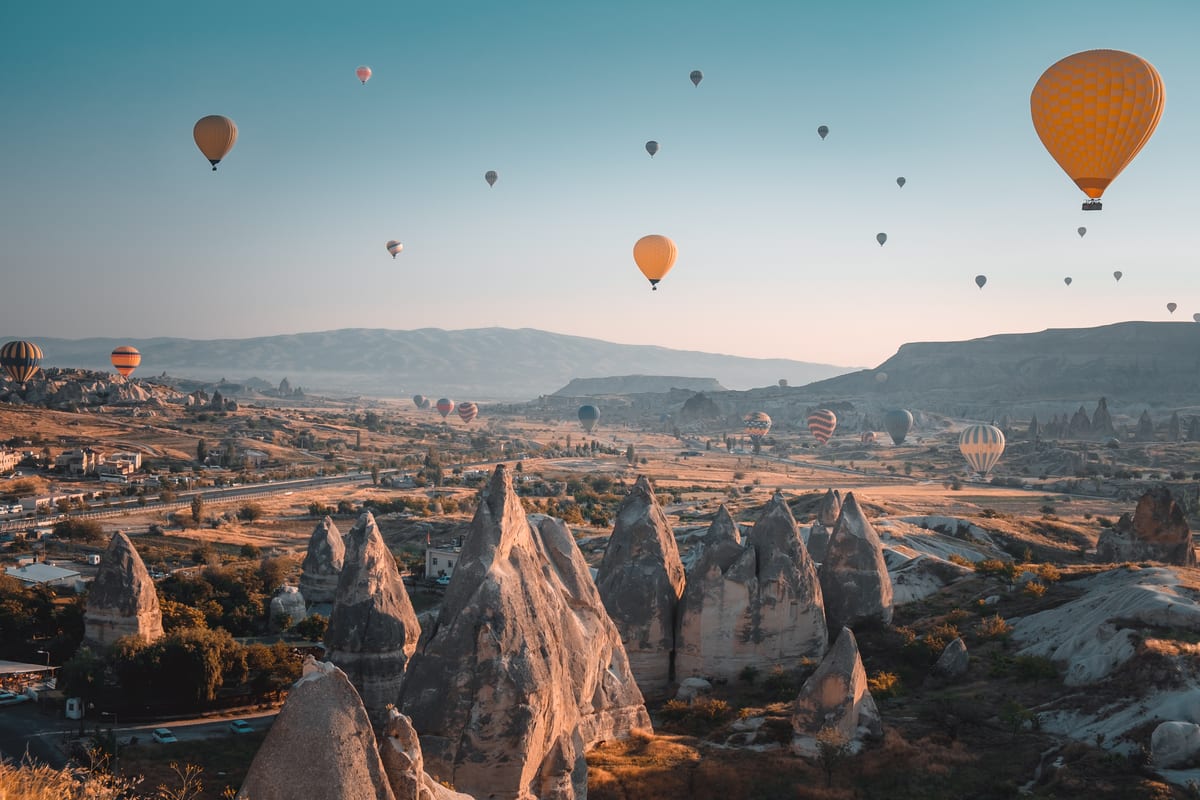
Best Cave Hotels in Cappadocia with Hot Air Balloon Views
Wake up to a sky full of balloons from your terrace. These are the best cave hotels in Cappadocia for the ultimate balloon-watching experience.
Planning a Cappadocia Balloon Proposal
How to plan a Cappadocia balloon flight proposal: timing, valleys, ring safety, and what to expect from the flight.
Cappadocia Balloon Flight Route: Valleys & Scenery Guide
What you'll see from the basket: Love Valley, Rose Valley, Pigeon Valley, and more. A valley-by-valley guide to Cappadocia balloon flight routes.
Ready to Experience It Yourself?
Our sunrise flights start from EUR 150 per person, with hotel pick-up, a light snack, and champagne included.
Book Your Balloon Flight